Contact Us


The short answer
Under Japan’s Family Register Act, a koseki (戸籍), Japan’s official family register, can be requested by the person recorded in it, that person’s spouse, and their direct ascendants and descendants. Direct ascendants means parents, grandparents, great-grandparents, and so on. Direct descendants means children, grandchildren, and further down the line.
You are a direct descendant of your Japanese ancestors. That relationship is what matters, not the passport you hold.
But eligibility is only the first of two hurdles. The second is specificity. A municipal office cannot search its records by surname and prefecture. To release a register, the office needs to know exactly which register you mean. Most overseas requests stall here, not at the eligibility stage.
Who has the right to request a koseki
Direct line only
The right runs vertically through your family, not sideways. You can request the registers of your parents, grandparents, and earlier generations in your direct line. You generally cannot request the register of an uncle, aunt, or cousin. Siblings sit outside the direct line as well, and requests for their records require a stated legal reason.
This matters more than it sounds. If your great-grandfather had a brother who stayed in Japan, that brother’s later registers are usually beyond your reach, even though he is family.
Your nationality is not the barrier
Japanese-American, Japanese-Brazilian, and Japanese-Peruvian descendants can and do obtain koseki records. In our experience, foreign citizenship is not what causes a request to fail.
What causes requests to fail is documentation. A municipal clerk in Japan has no way to confirm that you are who you say you are, or that you descend from the person named in the register. You have to demonstrate that connection on paper.
Terms you will encounter
| Term | What it means |
|---|---|
| koseki (戸籍) | Japan’s official family register, organized by household rather than by individual |
| joseki tōhon (除籍謄本) | A copy of a koseki that is no longer active, usually because everyone in it has died, married out, or moved the register elsewhere |
| kaisei genkoseki (改製原戸籍) |
A superseded version of a register, kept after the format was revised by law |
| honseki (本籍) | The registered address of a household, which is not necessarily where the family lived |
| ininjō (委任状) | A power of attorney authorizing someone else to file the request for you |
What you need before you start
Three things. The first two do most of the work.
The honseki, down to the lot number
The honseki is the address a family register is filed under. It is a legal reference point, not a residence. A family could live in Osaka for forty years with a honseki in rural Niigata.
Here is the part that surprises almost everyone: the honseki is recorded down to the banchi (番地), the lot number. Not the prefecture. Not the city. The lot number.
A request form asks you to write that full address. “Hiroshima Prefecture” is not enough to file with. Neither is “Kumamoto City.” Without the specific honseki, the office has nothing to search against.
Clues that sometimes carry the lot number:
- Immigration and naturalization paperwork in your own country
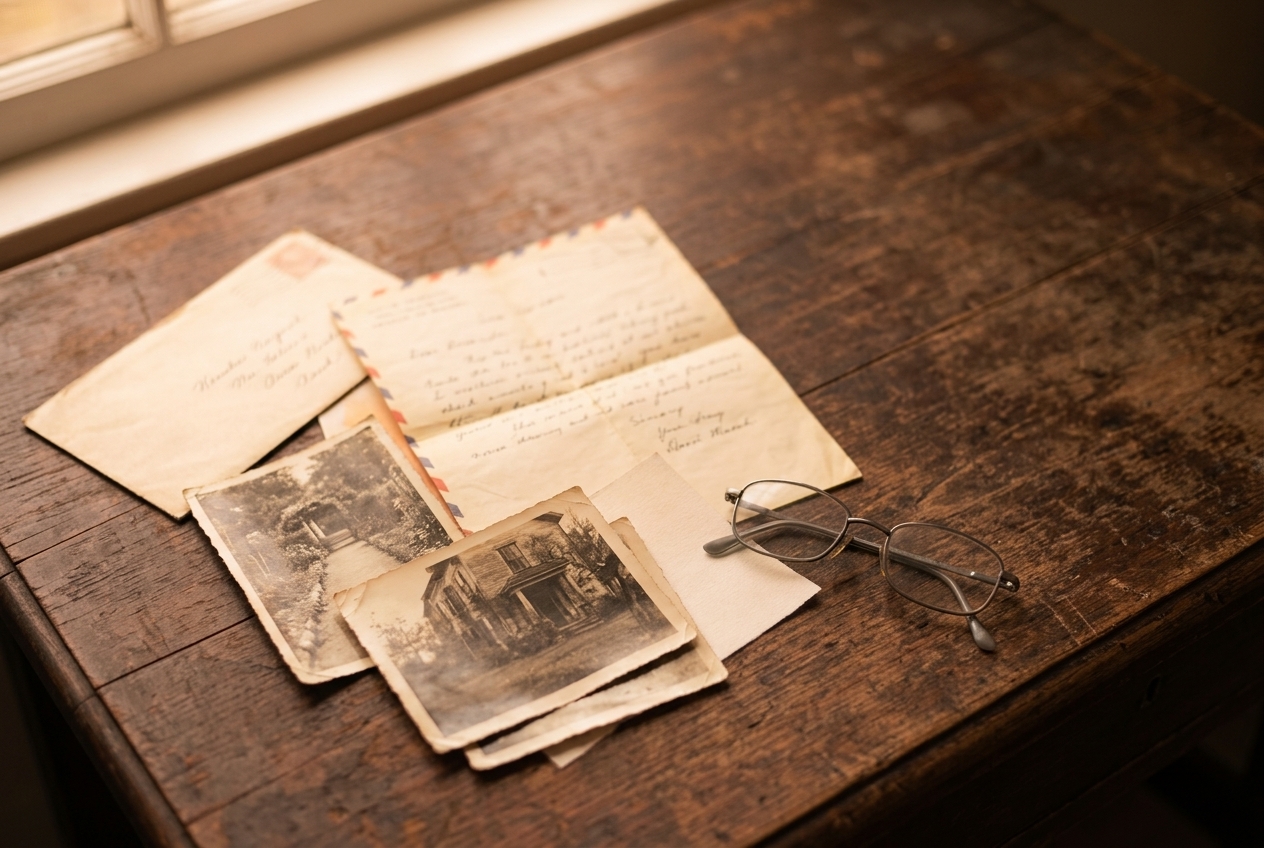
- Old envelopes or letters addressed to relatives in Japan
- An ihai (位牌), a Buddhist memorial tablet, or a family gravestone
- Ship passenger manifests and consular records
- Older relatives’ recollections, which are worth recording before they are lost
Our article on uncovering lost place names covers this search in more detail.
Your ancestor’s name in kanji
Japanese names are written in kanji, and romanized spellings do not map back cleanly. “Ito” could be 伊藤 or 伊東. “Sato” could be 佐藤 or 佐東. These are different families with different names that happen to sound alike.
A register is filed under the kanji. If you know only the romanized spelling, the office cannot confirm that the person in the register is your ancestor rather than an unrelated household with a similar-sounding name.
This has a consequence worth stating plainly. If the kanji cannot be established, foreign civil documents may not be able to bridge the gap on their own. You may hold a complete set of birth, marriage, and death certificates and still be unable to prove that the man in the Japanese register is the man in your certificates. The documents establish your line. They do not, by themselves, establish which Japanese household that line connects to.
Documents showing your line of descent
Birth, marriage, and death certificates from your own country, forming an unbroken chain from you back to the emigrating ancestor. Every generation needs a link.
These support a request. They do not replace the honseki and the kanji. Think of them as the third component, not the first.
Three ways to request a koseki from overseas
Route 1: Requesting by mail yourself

You write to the municipal office that holds the register and send the request internationally.
This route exists, and some overseas requests have been processed this way. But payment is the practical problem. Japanese municipal fees are normally paid with a domestic postal money order that is not available outside Japan.
In our experience, people have improvised, including by placing cash directly in the envelope, and some offices have accepted it. We do not recommend this. It is not a reliable method, and the handling of overseas requests may well tighten as more descendants abroad begin asking for these records. A method that worked for someone in 2019 is not a method you should count on.
Route 2: Working through a representative in Japan
Someone in Japan files on your behalf, authorized by an ininjō.
Japanese consulates and embassies abroad do not forward koseki requests, so this is not something your local consulate can handle for you.
Traditionally, this route meant notarized signatures and documents crossing the Pacific twice. That is no longer necessary. At Japan Genealogy Connect we use a digital power of attorney, which lets a client authorize us electronically. No signature certificate from a consulate. No international mail. It is one of the reasons the process moves faster than people expect once it starts.
Route 3: Going to the municipal office yourself
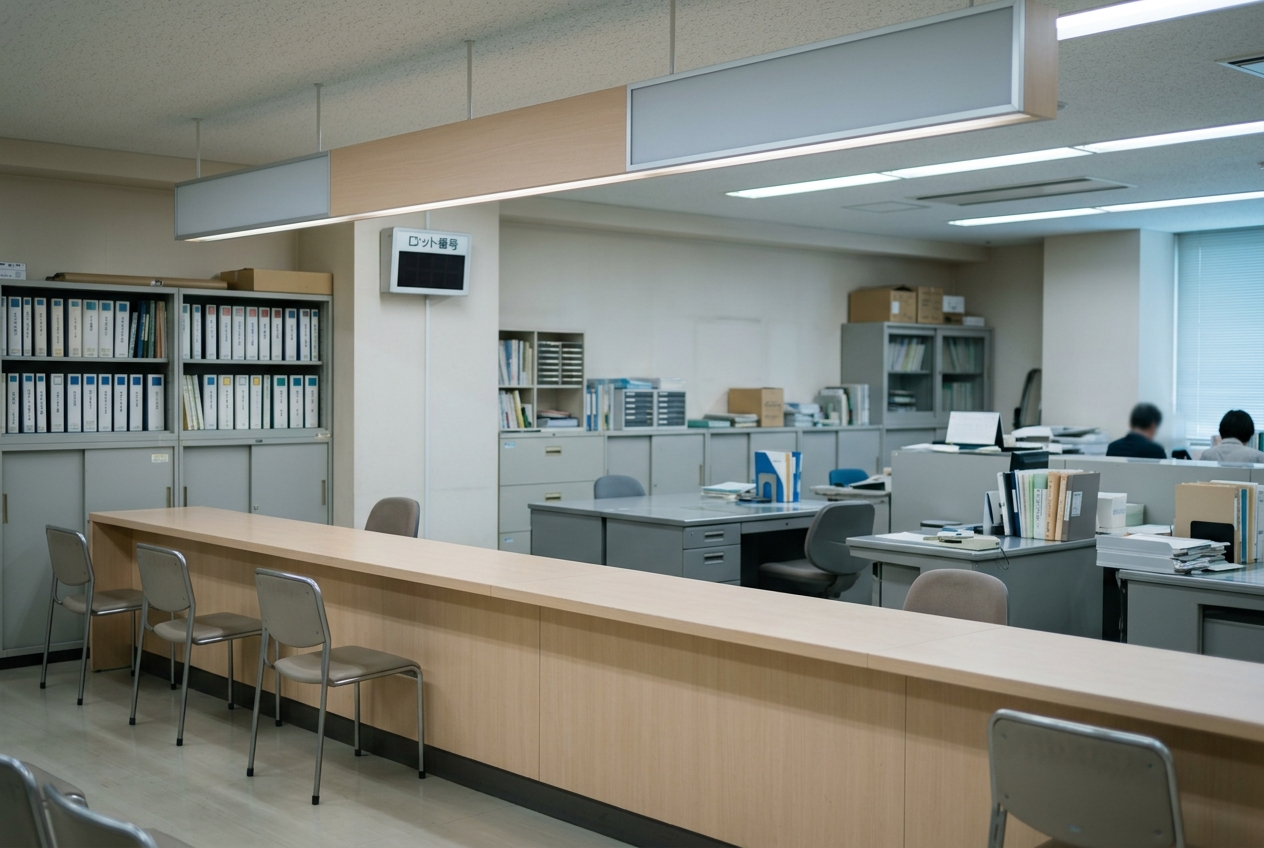
If you are traveling to Japan, you can request in person.
Go to the municipal office with jurisdiction over the honseki. Bring your passport and the documents showing your descent.
One limitation catches visitors off guard. Each office holds only the registers filed within its own jurisdiction. If your family’s honseki moved at some point, the earlier register sits in a different town, and that town may be hours away. Municipal mergers complicate this further. Many towns were absorbed into larger cities during the reorganizations of the 1990s and 2000s, so the office you need may no longer carry the name your ancestor knew. Confirm the current jurisdiction before you travel.
| Who acts | What you must have | Main constraint | |
|---|---|---|---|
| By mail | You | Honseki, kanji, proof of descent | Paying the fee from abroad |
| Representative | Someone in Japan | The above, plus an ininjō | Finding a representative you trust |
| In person | You, in Japan | The above, plus your passport | One office per jurisdiction only |
What this process cannot give you
Koseki research has a floor and a scope, and both are worth knowing before you begin.
Registers generally reach back to the format introduced in 1886 (Meiji 19). Earlier records were largely not carried forward. Our article on how long koseki records are kept explains the retention rules and the gaps they create. Some registers no longer exist at all, lost to wartime destruction or expired retention periods.
The koseki also records a narrow set of facts: births, deaths, marriages, adoptions, and household composition. It does not record occupation, social class, kamon (家紋), the family crest, or where anyone is buried.
In our experience, there is one more limit that no one anticipates. Obtaining a register and reading it are separate problems. Meiji-era and Taishō-era registers are handwritten in cursive script, in older kanji forms that have since been simplified. Many arrive as copies from microfilm, faint, with the ruled lines of the form crossing through the characters. Most Japanese people today cannot read them. Holding the document is real progress. It is not the same as having the information.
Common obstacles, and what they mean
You cannot pin down the honseki. This is the single most common stopping point for descendants abroad. It is a research problem in its own right, and it usually has to be solved before a request can be filed.
The kanji cannot be confirmed. Romanized spellings from immigration records were often approximations, recorded by clerks working by ear.
One register leads to another. This is not a single transaction. A register typically names the honseki the household came from, which points to an earlier register, held by a different office, requiring a separate request. You work backward one link at a time, and each link takes weeks.
Offices vary. Documentation requirements and response times are not uniform across municipalities.
It takes months. How long depends almost entirely on how often your ancestors relocated their register. Two to six months to reach the oldest surviving register is typical. Families that stayed in one place resolve faster. Families that moved repeatedly take longer.
Where to go from here
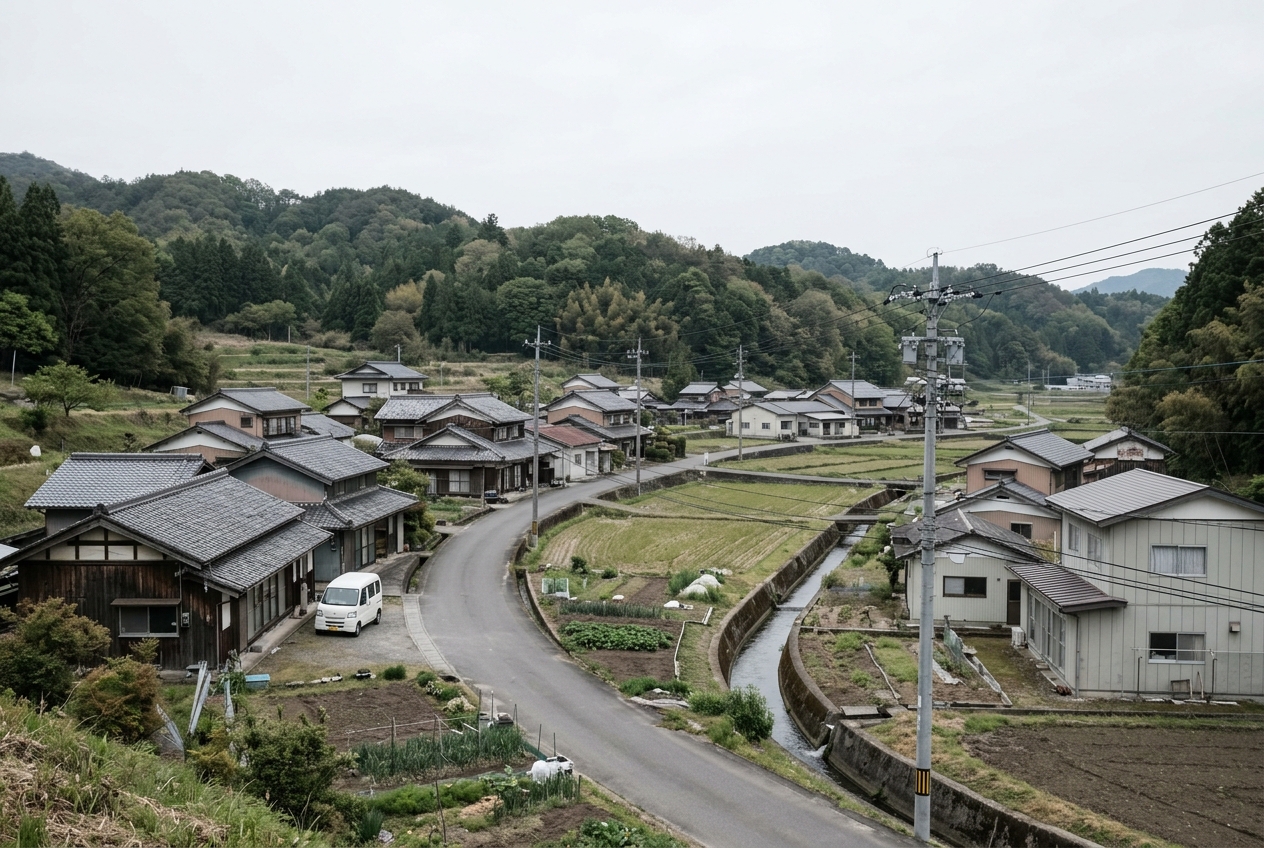
If you already know the honseki down to the lot number and your ancestor’s name in kanji, you have what a request needs. Requesting by mail is difficult from abroad, but a representative in Japan or a visit in person are both workable paths.
If you do not know the honseki, you are in the same position as most people who contact us. Very few descendants abroad arrive with a lot number in hand. Finding it is part of the work, drawn from immigration records, family documents, photographs, and Japanese sources that are not searchable from overseas. It is not always possible, and what we can find depends on what you already have. But the starting point is usually less than people assume.
Our Koseki Research service covers both stages: identifying the honseki, then obtaining and translating the registers themselves.
If you are not sure whether your fragments are enough to work with, tell us what you have. An initial consultation is free, and we will give you an honest read on what is realistic.
Request a Free Consultation
 Contact Us